

Raising Intuitive Kids (Not Workaholics)
How I’m parenting my kids to trust their own needs more than the pressure to just push through.

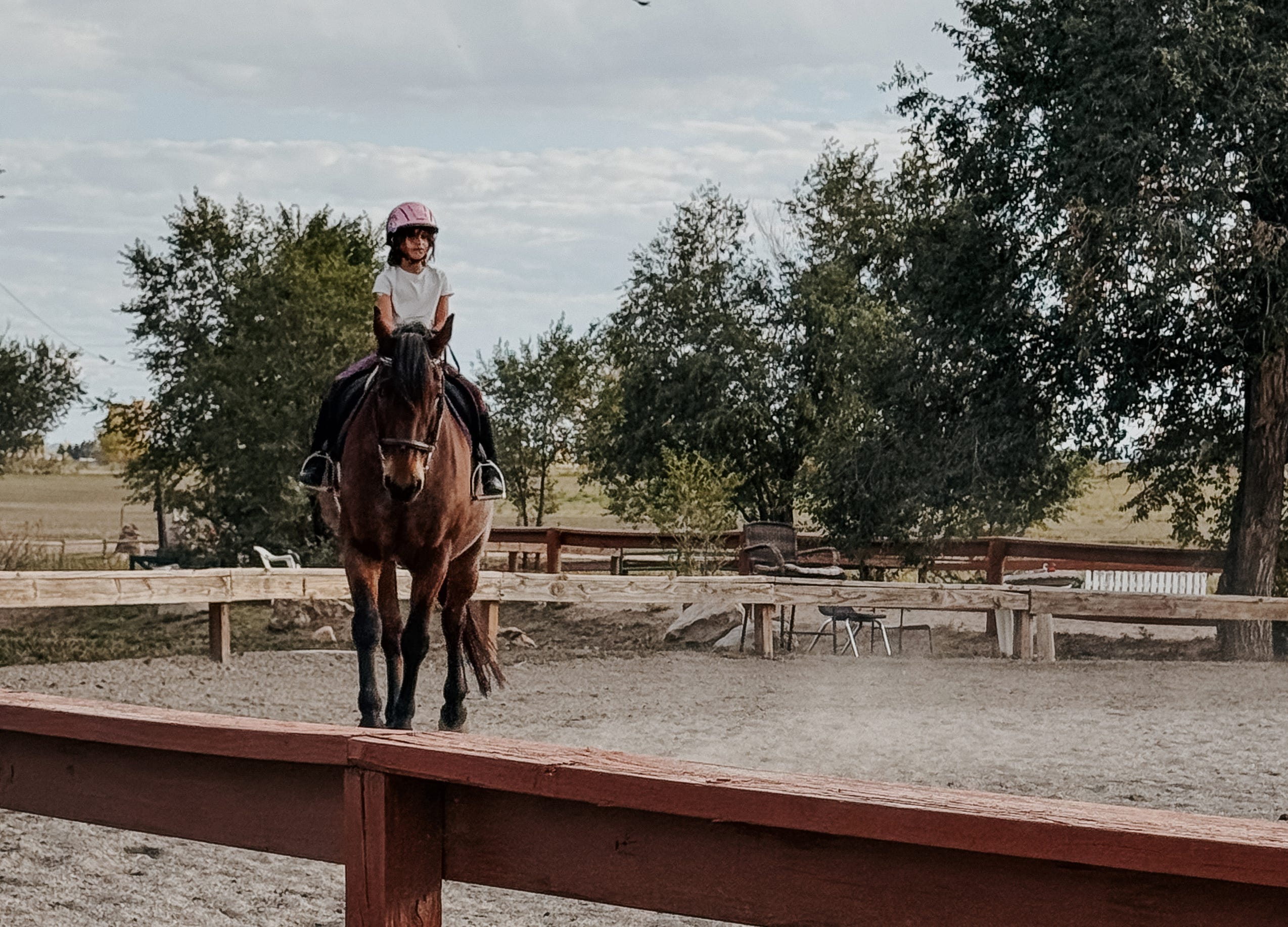
A couple of weeks ago, I picked my 9-year-old daughter up from school and began our weekly sprint across town for her horseback riding lessons.
(The whole thing is a pain, if I’m being honest. Her school gets out later than most, so we always feel rushed and stressed. But she genuinely loves riding, so it feels worth it.)
But on this particular Monday, she kept saying, “I don’t want to ride. I don’t feel up for it. I just want to go home and REST.”
I insisted, “But you love riding! It’s only an hour and, before you know it, you’ll be home taking a nice relaxing bath.”
When we pulled up to the stables, she asked one more time if she could skip, before (begrudgingly) heading for the corral. A short while later, she was on her horse & I was certain we were good to go.
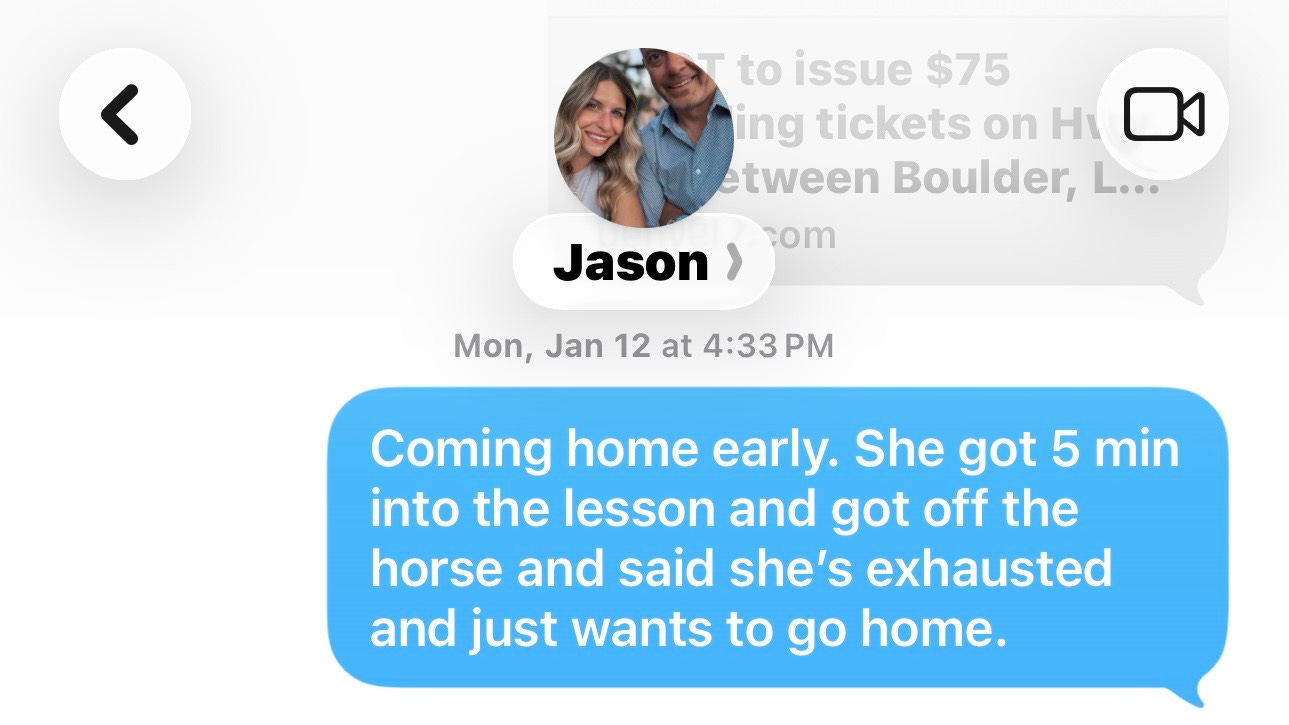
But five minutes in, she did something I’ve never seen her do before: she dismounted mid-lesson to come talk to me…
“Mom. I’m really, really tired. Can I please go home?”
The fear of ‘raising a quitter’
To say I was torn is an understatement.
What will the instructor think?
Am I a pushover if I let her decide?
What am I teaching her if she just quits?
Do I really want to eat the $65 I just paid?
I had every reason to override her in this moment. To tell her to tough it out. To expect her to learn that sometimes we just have to do things we don’t want to do.
Then I paused, looked at her and really took her in. Her tiny 9-year-old self looking at me desperately, hoping I’ve really heard her needs.
That’s when the real fear flooded in: What if I don’t listen to her?
I realized I would just be teaching her to ignore what her body knows it needs. I’d be teaching her that her needs don’t matter. I’d be teaching her that I won’t advocate for her.
My decision was made. Zero chance was I letting my ego (or the money) come at such a cost to my relationship with her—or worse, her relationship with herself.
Glad you’re here! 👯♀️
A Little Less is for the mom who’s running her life well—tired of feeling like she isn’t. Subscribe below for access to every essay: past, present & future. No paywalls, no locked archive. Ever.
How we hardwire their nervous systems
My mind fast-forwarded to her teenage friendships, college relationships, and adult work dynamics. I knew that while today’s riding lesson wasn’t a direct through-line to those future moments, it would play a role. These micro-moments hardwire the nervous system.
So I said yes.
I talked to the instructor and watched as my daughter’s whole body relaxed. Slowly, her chipper personality returned because her sense of emotional safety had returned. She had been seen, heard & respected.
I don’t think my response would have been the same a year ago. But lately, I’ve been thinking about the bigger picture…
If this is your first time here—welcome! 👯♀️
I write one essay like this every week. 💌 The kind that makes you feel less behind & more like yourself. If that sounds like what you need, you can join for free right here.
Are we raising future workaholics?
“I’m worried we’re raising our kids to be workaholics,” I said to Jason over coffee earlier this week.
It’s something I’ve been grappling with over the past few months, especially as we’ve navigated our oldest’s transition into middle school. It has been an internal conflict over what is just “part of growing up” & what has actually crossed the threshold into thoughtless societal programming.
Are we trying to optimize every waking moment of our kids’ days?
This question has forced me into a period of intentional reflection. It has required me to override my inclination to just go along with the program. Instead, I’ve had to take time to consider what I value for my kids, and more importantly, what they want for themselves.
Because if I’m constantly overriding their inclinations, how am I really setting them up for success in life? After all, who am I to be the end-all be all on their lives?
So instead, there’s been this dance. A dance between tuning into my wisdom as a parent while also holding space for my kids’ innate, inner knowing.
In case this is something you’ve been wrestling with as well, I thought I’d share the 5 different ways I’ve worked on holding space for that intuition over this past year.

1. They know more than we give them credit for
Most of us were raised in a time when “parents know best.” We were programmed to believe that to be good is to obey. Over time, that taught us to look outside ourselves for footing, reassurance & even our sense of self.
We are at a crossroads: raise our kids as we were raised (and repeat the cycle) OR trust that while we know a lot, our kids do, too.
Arguably, when it comes to intuitive knowing, our kids are even better at it than we are because they have less programming interfering with the signal.
2. Catching the automatic no
Have you noticed how fast a “no” will just fly out of your mouth? It happens so quickly it’s almost without your consent.
This is a newer awareness (that I credit Jason for) of how easy it to have all the reasons to say no, but in doing so, we inadvertently discredit our kids’ perspectives in the process.
And at the end of the day, I am the parent so the final call does land on my shoulders. But the difference now is pausing to consider my kids’ perspectives, to invite them in to some of the decision making.
It’s not about letting them calling the shots. Instead, it’s about embracing the truth that there can be should be more than one voice in the parent-child relationship. It can allow for so much more meaning & value than the automatic ‘my way or the highway’ approach so many of us were raised on.
3. Low-stakes practice
I always say parenting is a long game because even small, seemingly inconsequential moments make the human our kids eventually become.
To be fair, that could sound like too much pressure. But I mean it in quite the opposite sense. Because what a gift—what a benefit—to have so many years full of these small moments to help shape our children into who they’re becoming.
It allows ample room for life to happen with all of the inevitable missteps, repair & learning that will happen along the way. We’re not always going to get it right & the moment I chose to stop expecting that of myself or my kids, we opened up a lifetime of opportunities for becoming ourselves & enjoying life more deeply.
So I’m always looking for ways my kids can strengthen their autonomy & sense of self so it’s in the fabric of their being when they’re older (even if it means things go sideways sometimes).
The riding lesson the other day is a perfect example of this. If it were becoming a pattern, then my approach might have been different. But that hasn’t been the case, so why not lean in?
And that goes for even smaller micro moments—like what they feel like wearing on any given day or what they do/don’t feel like eating. Giving my kids these inconsequential moments of opportunity is such a low-stakes way to reinforce listening to their intuition & TRUSTING they know what’s best for themselves.
4. Kids need personal time for rest & creativity
Ever since they were newborns, I’ve been obsessed with protecting my kids’ right to rest. I never apologized for their need for a nap or an unconventionally early bedtime.
Now that they are 9 and 11, I feel this even more strongly. We live in a society of consumption. If we aren’t in the throes of optimized output, we are in the depths of constant input.
And I’ve come to realize that it leaves me so disconnected from myself & the people I love most. And that’s no way to live.
Similar to my experience with cutting my own screen time, I view it just as (if not more) important to protect my kids sense of peace as well—because if I don’t, who will?
Nine months ago, we cut out weeknight screens. And sometimes my 9- year old is in bed by 7. I constantly tell my kids that I’m not afraid of their boredom.
Through protecting some margin in their day, my kids are able to stay in tune with themselves—who they are, what they need, what they are interested in doing & where they want to go next.
If I don’t intentionally pause the endless barrage of inputs & outputs that come in the form of school/homework/organized activities/screen time how will they ever have a moments peace to just…be? How will they be able to hear themselves amidst all of that noise? To me, it would be too precarious to leave them without that space in their lives.
5. Learning my kids’ human design
Human Design is essentially a system to help you understand your personal blueprint for life. One particular piece I’ve found especially helpful in my parenting is knowing my kids’ Inner Authority Type.
My Son (Emotional Authority): His intuition comes through waves of emotion. He needs time to settle. As a parent with Splenic Authority (immediate instinct), my impulse is to rush him. But now I know the best advice I can give him is to “sleep on it.”
My Daughter (Sounding-Board Authority): She needs to talk through her decisions out loud to hear the clarity click into place.
Just understanding how each of us is designed to arrive at our “knowing” has helped me be more supportive. I hope that long-term, this self-knowledge cements for them so they never have to look outside themselves for direction.

I suppose I don’t know exactly how or whether these understandings are actually helping mitigate society’s hell-bent penchant for optimization & productivity but I can’t imagine that it the effort isn’t worth it. I hope in some way, it’ll at least leave my kids with a lingering essence of knowing who they are, what they need & not be afraid to advocate for it even when it may not be society’s way of doing things.
I’d love to hear from you: What are you thinking after reading this? What hesitation lingers in your mind? Let’s chat in the comments.
Talk soon,
Erin

This post’s free. 👯♀️ Most weeks, the full essay is for paid subscribers only—the stuff I don’t share publicly. How I actually handle the hard parts, the specific decisions I’m making & the things I’ve stopped doing. Plus, audio versions recorded by me & a private comment section with the other women who are doing things differently.
More from A Little Less:




New here?
I’m Erin—a former teacher, wife & mom of two in Boulder, Colorado. And this is where I write about what it looks like to stop running my life the way I was told to & start trusting what I know about it instead.
If you want to understand what A Little Less is all about, I think you’ll appreciate this post.
And if you already know you want to be part of the conversation, you can just drop your email below to start receiving essays like these straight to your inbox every Sunday. 👯♀️

This essay—and every essay—is free for every reader because our paid subscribers & founding members keep it that way. 🤍 I’m deeply grateful for their support.