

I asked Claude to help me stop forgetting the things that matter.
This is my anti-optimization/anti-hack way to use AI so you can finally stop holding everything important in your head.

🎧 Prefer to listen while you drive or fold laundry? I recorded an audio version—just tap the play button at the top of the post to listen in.
For months I had been trying to do the same handful of things — eat enough protein, take the supplements, move my body in the way that actually worked for me, sleep — and dropping at least one of them every single day.
Some days I’d nail the food and forget the supplements. Some days I’d get the workouts in and crash on sleep. The pieces individually weren’t hard. Holding all of them in my head at once, on top of everything else my brain was already running, was the thing I couldn’t do.
And I kept blaming myself for it.
I knew this stuff mattered to me. I’m thinking about perimenopause in a real way now. Longevity is on my mind in a way it wasn’t five years ago. I’m not trying to optimize for a certain look or body type. I’ve been trying to take care of myself in a way that will compound over the next few decades — and I just haven’t been able to get the basic pieces to fall into place all at the same time.
And the longer that this went on, the more I felt like I just wasn’t capable of caring for myself the way I cared for everyone else.
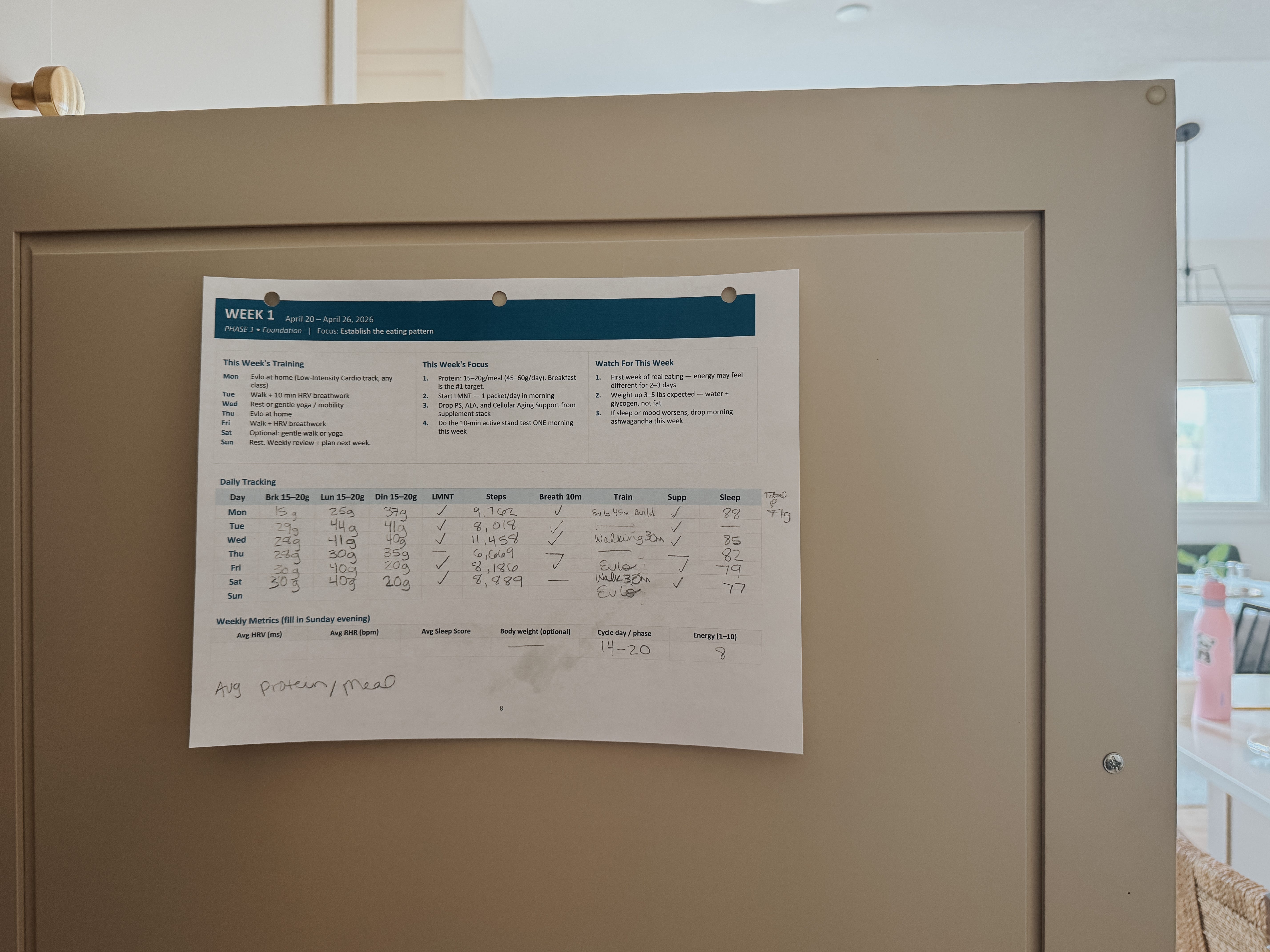
So one Sunday, instead of trying to remember it all again, I asked Claude to help me build a single one-page sheet I could actually follow. Not a generic protocol. Not someone else’s plan. Mine — based on what I care about right now, what fits my life, what would actually move the needle for me.
Twenty minutes later I had it. Training for the week, focus areas, daily tracking, weekly metrics. No hours of googling. No spreadsheet I was going to have to keep updating. I print a new one every Sunday and tape it inside my pantry door.
It is the first time I have stayed consistent with all of it at the same time.
That sheet was the first one. It wasn’t the last.
Glad you’re here! 👯♀️
A Little Less is for the mom who’s running her life well—tired of feeling like she isn’t. Subscribe below for access to every essay: past, present & future. No paywalls, no locked archive. Ever.
There’s now a watering schedule for my houseplants taped inside the cabinet where I keep the watering can — which plants get water each week, which ones get fertilized, which ones to skip because they’re still drying out. I haven’t killed a plant since. More importantly, I am not running a houseplant calendar in my head.
There’s a planner on the fridge for my son, who got behind on his assignments and was drowning under what he needed to catch up on. We made it together — every missing assignment, every upcoming one, plenty of blank space for each weekday so he could decide what to tackle when. It changed our entire dynamic. I went from nagging him every afternoon to having an actual conversation. He went from spiraling to getting through it on his own.
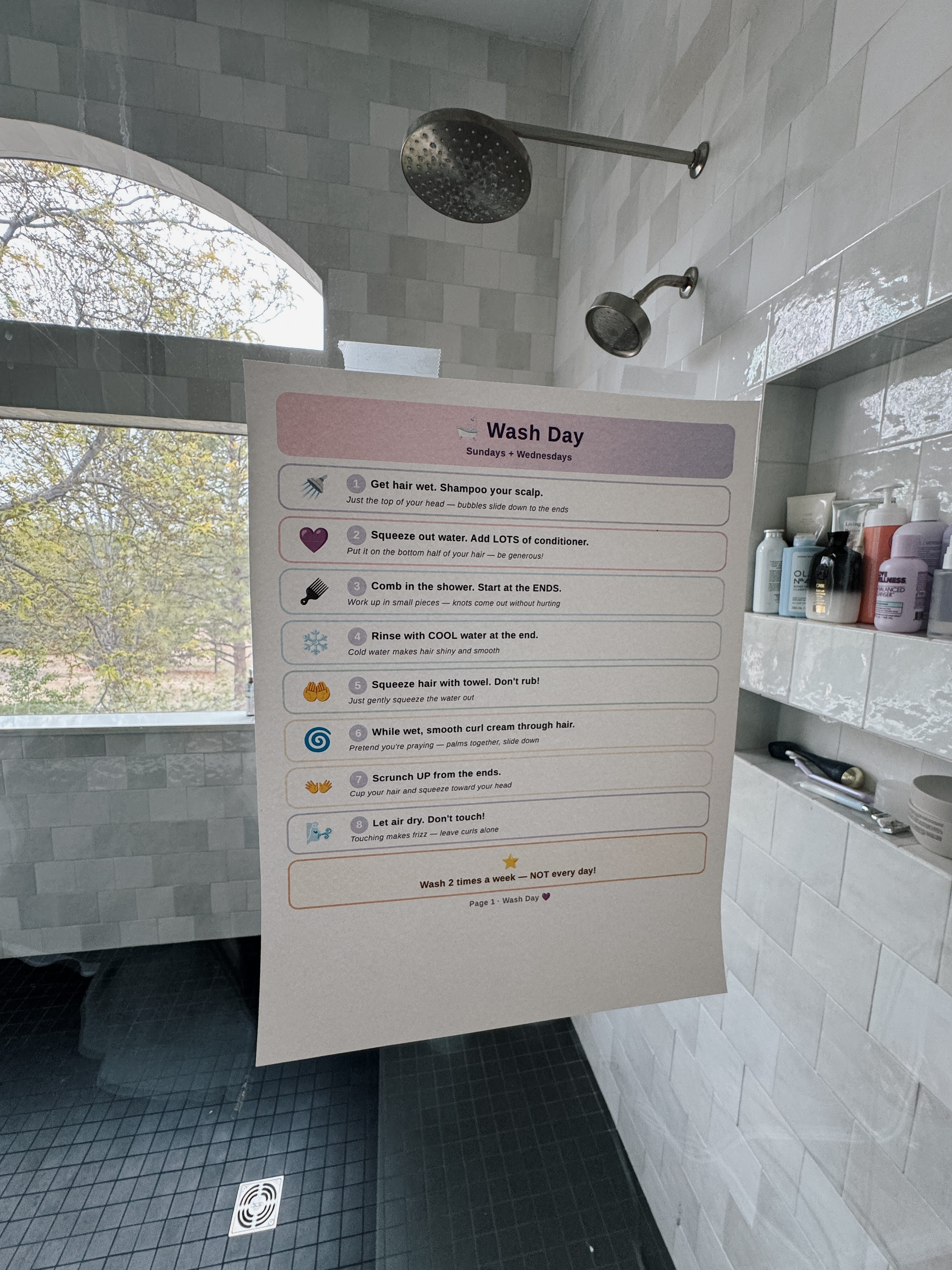
There’s a step-by-step hair guide for my daughter in our bathroom — visuals included — because she wants to take care of her own curls now, and the routine I had been doing on her had eight steps that she couldn’t do without me standing there walking her through it.
None of this is optimization. None of it is a hack. None of it is a system that needs maintaining.
It’s the opposite of all of those things.
I’m not going to sit here and pretend this is some breakthrough productivity move. It is the smallest thing I have ever written about. I made some sheets. I taped them to some doors.
But here is what I think is actually going on underneath it.
There is a whole industry telling you that the answer to feeling like you’re failing at the things you care about is more discipline. A better routine. A new planner. A coach. A protocol. An expert who has figured it out and will sell you the system.
What that industry doesn’t account for is how much work it takes to even get to a system. The hours of research. The conflicting expert advice you have to parse. The threads, the articles, the version you have to piece together for yourself out of all of it. Then the actual physical making of the thing — the spreadsheet, the columns, the cell borders, the page margins. By the time you have something usable, you are already worn out. And now you have to maintain it.
The cheat sheets skip all of that. I describe what I want. It parses what I’ve read and considered and tried. It produces something I can print and use that afternoon. The whole thing takes the time of writing one really good email.
And none of the people selling you a system know you. They don’t know what’s in your cabinets. They don’t know what your kid is actually behind in, or what makes him spiral. They don’t know what your daughter has been trying to do on her own and where exactly she gets stuck. They don’t know which plants you have, or which window they sit in, or which routine you’ve been white-knuckling for two years.
So they sell you something generic, you try to bend your life around it, you fail at it, and you blame yourself.
What I am doing isn’t a system you should copy. It’s the opposite — it’s permission to stop looking for one.
There are things you care about. Probably more than a few of them. The plants you actually want to keep alive. The thing you have been trying to do for your health for two years. The kid who needs help getting un-buried from a school week. The version of your own routine you’ve been trying to remember and keep losing sight of.
You do not have to keep holding any of that in your head.
You get to put it on a piece of paper and look at it when you need to.
The brain you have been using to remember it all is needed for other things.
Talk soon,
Erin
PS—If you’re a paid subscriber, I dropped a voice note—about the difference between caring about an outcome and caring about the work of getting there—at the bottom of this post. 👯♀️
More from A Little Less




New here?
I’m Erin—a former teacher, wife & mom of two in Boulder, Colorado. And this is where I write about what it looks like to stop running my life the way I was told to & start trusting what I know about it instead.
If you want to understand what A Little Less is all about, I think you’ll appreciate this post.
And if you already know you want to be part of the conversation, you can just drop your email below to start receiving essays like these straight to your inbox every Sunday. 👯♀️

This essay—and every essay—is free for every reader because our paid subscribers & founding members keep it that way. 🤍 I’m deeply grateful for their support.
Keep reading with a 7-day free trial
Subscribe to A Little Less to keep reading this post and get 7 days of free access to the full post archives.