

What the experts don’t know about my kids.
I even had the training. And still almost missed what my kid actually needed.

You’re standing in the supplement aisle at 9 PM on a Tuesday because someone on Instagram told you magnesium would fix the sleep thing, the anxiety thing & possibly the rage-at-5-PM thing. You are holding two bottles — one chelated, one glycinate — and you are genuinely trying to figure out which one the algorithm said was better. You are doing what you have been doing for years. Looking for the answer in someone else’s hands.
I know because I was that person. I’ve been that person more times than I can count.
Here’s what it looks like from the outside, if you could somehow watch yourself move through a single week:
Monday. The pediatrician hands you a developmental handout and circles two things your kid should be doing by now. You drive home wondering what you missed.
Tuesday. The OB tells you what you’re feeling is probably hormonal, that you’re too young for perimenopause, and suggests breath work & 120 grams of protein a day. You leave the appointment with more homework and no answers.
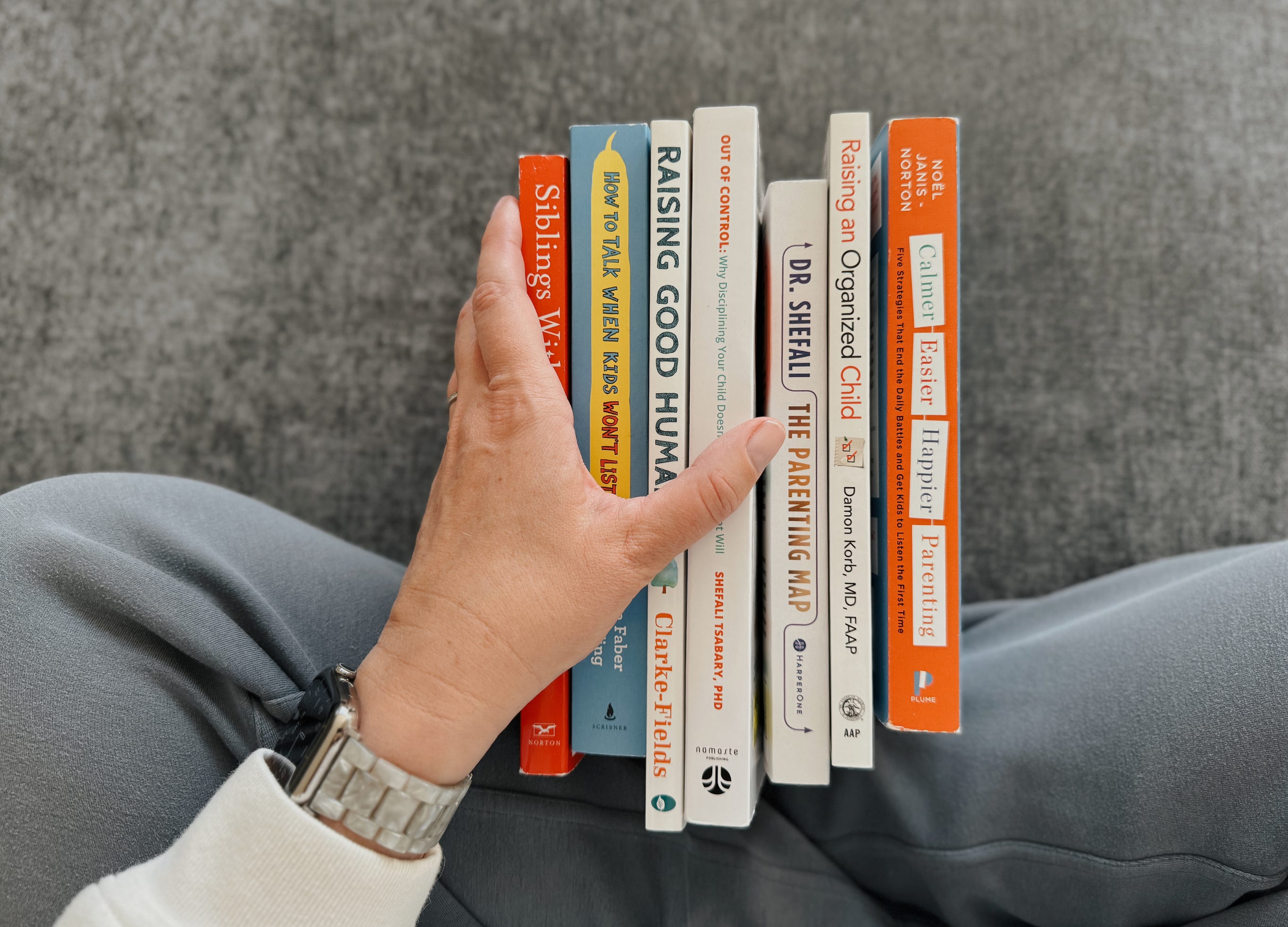
Wednesday. The parenting book on your nightstand — the one your friend said changed everything — contradicts the parenting book you read last month. One says hold the boundary. The other says soften it. Both have PhDs on the cover.
Thursday. The algorithm serves you a reel of a mom who wakes up at 5 AM, journals for twenty minutes, drinks something green & is doing a craft with her kids by 7:15. Her kitchen is clean. You watch it twice.
Friday. The school sends home a reading log, a nutrition worksheet & a reminder about the science fair. You’re now the project manager of 3 additional things nobody asked if you had capacity for.
Every single one of these sources means well. Not one of them knows your name. Not one of them has been inside your house at 6 PM when the dog is barking & someone needs help with long division & you haven’t sat down since 6 AM.
They don’t know your life. But somehow, you have been treating their advice like it outranks your own.
I taught for fifteen years. Eight of those were reading & math intervention — the work where you sit with one kid, or a small group, and figure out why the thing that works for everyone else is not working for them.
The curriculum exists. The research exists. The best-practice frameworks exist. And none of it matters until you figure out what works for the specific child in front of you, on this specific day, with whatever they are carrying when they walk through the door. Differentiated instruction is not a philosophy. It’s a Tuesday-morning practice of watching someone struggle and adjusting in real time because the system you’re supposed to be following does not know this kid. You do.
That was the version of me in those classrooms.
And then I had two babies, COVID happened, I left the classroom — and spent the first several years of motherhood doing the exact opposite of what I had spent fifteen years learning. Treating every pediatrician handout like a prescription I was supposed to fill. Every Instagram caption like a directive. Every book on my nightstand like the answer, if I could just get through it.
It took me an embarrassingly long time to realize the experts aren’t wrong. They are just not specific. They can’t be — they don’t know you.
You are not under-informed. I would bet everything you are over-advised.
A few years ago, my youngest wasn’t progressing in reading. The school ran a dyslexia screener & it was flagged. The school-based team isn’t qualified to diagnose dyslexia themselves, so they referred our family to a specialist. And on paper, that’s the right next step. That’s what you are supposed to do.
But something about that screener wasn’t sitting right with me. I have training in this — years of reading intervention work, including with dyslexic readers. And the piece the screener was missing was context. My child had been receiving gold-standard, research-backed curriculum designed specifically for dyslexic readers since preschool. If they had dyslexia, they would have been responding to that curriculum. They would have been making progress. They weren’t.
So instead of following the referral, I took her to an ophthalmologist — not for vision in the 20/20 sense, but for the brain-eye connection. And what we found was that my child was having to refocus their eyes 300 times to read 100 words. Their eyes weren’t tracking smoothly across the page. They were leapfrogging — skipping lines, losing their place, working three times as hard as they should have been for every single sentence.
It was vision therapy my child needed. Not a dyslexia diagnosis.
And if I had just followed the experts’ advice—if I had taken my child straight to the specialist they recommended—they very likely would have been labeled dyslexic, because their vision difficulties interfere with reading development in ways that look a lot like dyslexia on paper. They would have gotten the wrong support plan. And I never would have known why it wasn’t working.
This isn’t about dodging a diagnosis or a label. It’s about knowing — in my gut, with my own training & with years of watching my specific child — that what the experts were telling me wasn’t tracking. And my child wouldn’t have gotten the right help if I had just followed the school’s advice without questioning it.
You know your kids better than the pediatrician who sees them twice a year for fifteen minutes. You know what your kid will actually eat. You know what bedtime actually looks like in your house — not the version in the book with the dim lighting & the calm narration, but the real one with the stalling & the water requests & the third trip to the bathroom.
That’s not nothing. That’s ten years of knowing someone—or eight, or five, or two. And you have been handing that authority over, piece by piece, to people who have a credential & a framework but no idea what your actual Tuesday looks like.
You’re not doing it wrong. You’re doing it your way. And your way is the only version that was ever going to work inside your actual life to begin with. 💕
What's the thing you knew about your own kid — or your own life — before anyone else figured it out?
Thanks for reading. Truly. This publication is small on purpose, and the fact that you spent a few minutes of your day with me is not something I take for granted.
Talk soon,
Erin
PS—If you're a paid subscriber, I dropped a voice note about how I actually decide when to trust an expert & when to push back at the bottom of this post. 👯♀️
More from A Little Less:



This essay—and every essay—is free for every reader because our paid subscribers & founding members keep it that way. 🤍 I’m deeply grateful for their support.
Keep reading with a 7-day free trial
Subscribe to A Little Less to keep reading this post and get 7 days of free access to the full post archives.