

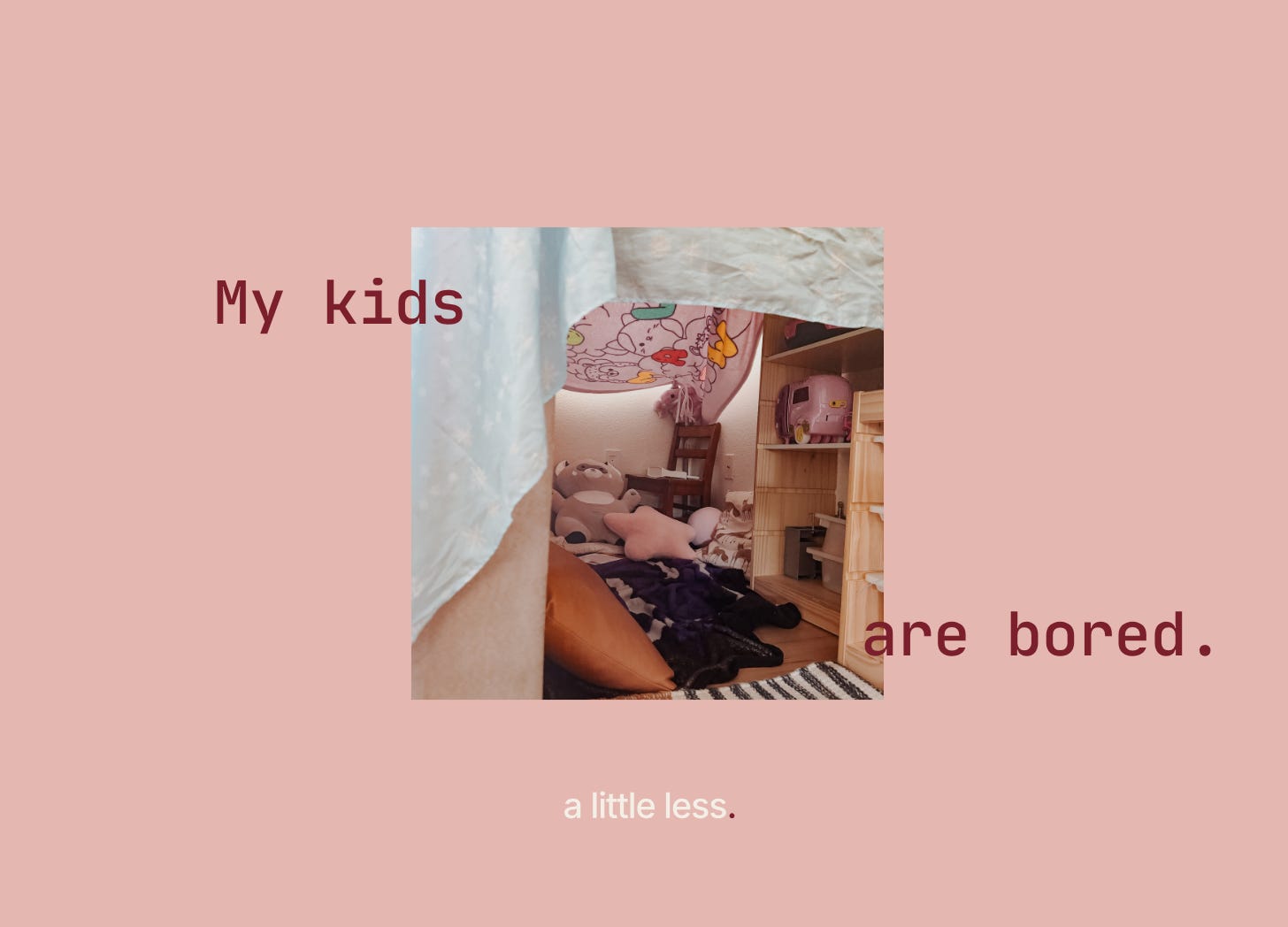
My kids are bored, but that's not my problem.
We're a year into screen-free weekdays. Here's what I learned about play, boredom & my parental urge to fix both.



I’m unlocking this for all readers—it felt like the right essay to share openly. Enjoy! 👯♀️

There’s a Sunday morning ritual that’s existed in our home for well over a decade. We go nowhere. We do nothing.
Jason brews coffee & turns some music on the stereo. I feed the kids & the dog. Then, we relax.
The kids usually choose to enjoy their screen time, and often so do Jason and I.
A few Sundays ago, the kids had hit their screen time limit, I’d collected their iPads, and I noticed they were lingering. And as if on cue, the chorus of Mom, I’m bored began.
As I reached for my coffee, I caught sight of Jason on his device, which prompted me to look down and notice my own in hand as well. I looked up at both kids & felt a little embarrassed.

Now, a year ago, the iPads would’ve kept them occupied well past that point. Last May was when it changed. Screen time for the kids was something they’d come to expect daily. And we saw the impact it had on their sleep, creative play & personal interests.
So Jason and I agreed — we’d cut screen time by 70% each week with one straightforward rule: screen time would be reserved for weekends only.
I’m not going to pretend it went smoothly to start. It didn’t. There was a certain ease to relying on screens to occupy the kids, see them content, and move through our own evening rhythms with fewer interruptions.
The first two weeks were the hardest. They pushed back every day and I had to hold my face neutral when I wanted to cave. It was uncomfortable to absorb my kids’ discomfort when I was the one who caused it.
And my kids were very clear about whose job it was to fix their boredom. Mine.
The decision I'd made for my kids became work I hadn't signed up for.
What I had to let go of was the belief that if my kids were bored, I wasn’t doing enough.
There’s a serious cultural norm that expects our children’s play has a certain aesthetic to it.
There’s a particular sentiment that when provided with an environment rich with wooden toys, art supplies, and dress-up clothes — preferably rotated and displayed thematically — our children will thrive, grow, and (most importantly) never be bored.
The American child is always in need of facilitation. Whether by screens, by parents, or by extracurriculars.
This didn't work for me. It didn't work for my kids either.
Play is the work of our children, and we’ve taken it away from them at every turn. And somehow managed to make it more work for us to own.
I couldn’t continue to save my kids from their boredom.
It was never my role to facilitate my children’s play. My role was to believe they’d figure it out.
Most days, they don’t ask for their screens. They have time to do their chores, their homework & play. They go outside. They find neighborhood kids to run around with. They build forts and design membership cards for it and set up play zones inside for music & Magnatiles. And I don’t ever facilitate that. They do.

As for that Sunday morning a few weeks back? They eventually wandered upstairs to the playroom. By the time I looked up, they’d been at it for hours.
Talk soon,
Erin
P.S. If you’re a paid subscriber, I dropped a voice note this week. It’s the part I almost didn’t write. Scroll down & hit play.

More from A Little Less



If there’s something on your mind that you want help thinking through, I have a limited number of 1:1 sessions available here.
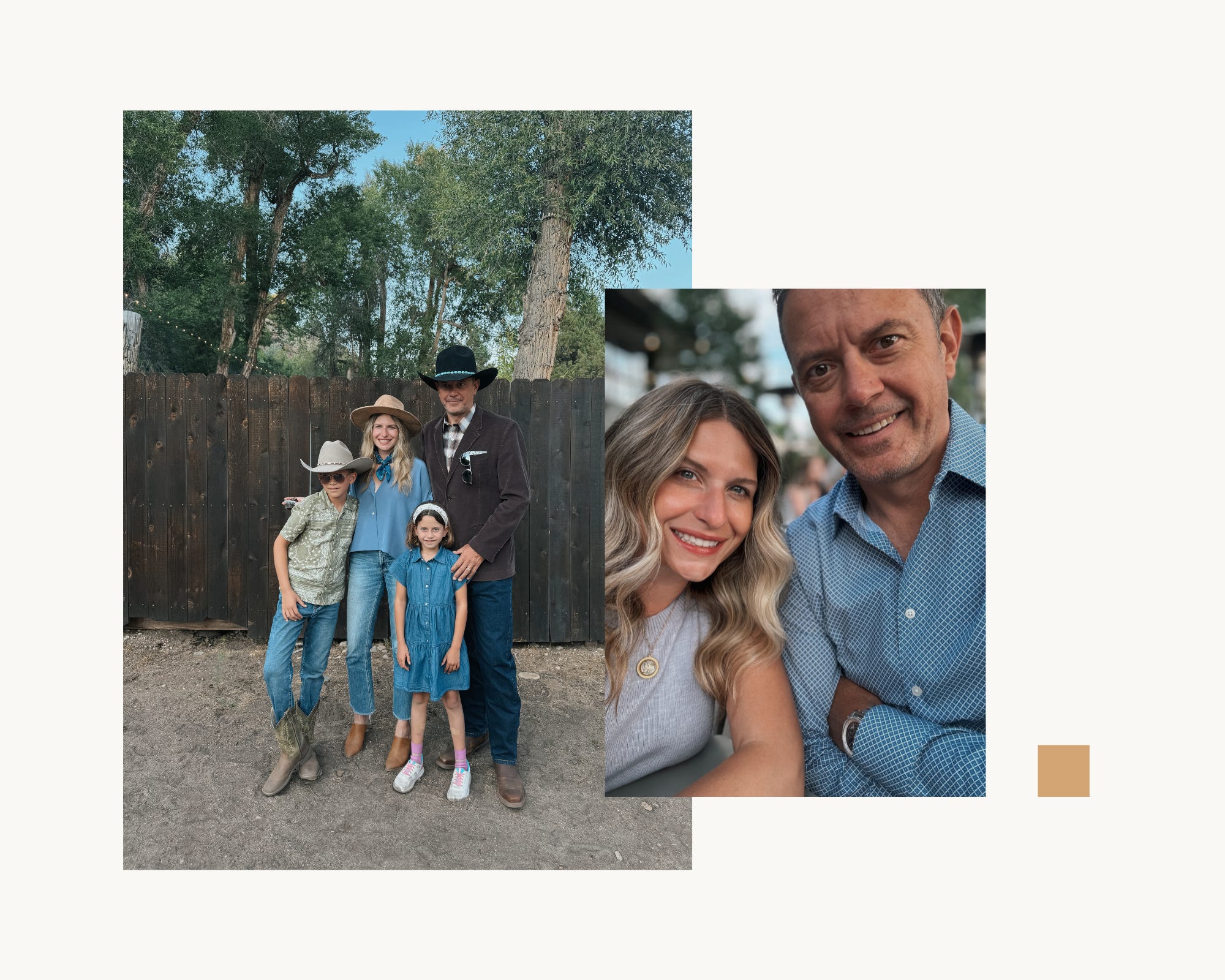
I’m Erin, a former teacher, wife & mom of two in Boulder, Colorado. This is where I write about what it looks like to stop running my life the way I was told to & start trusting what I know is right for me instead.
If you want to understand what A Little Less is all about, I think you’ll appreciate this post. But if you already know you want to receive these essays in your inbox every Sunday, you can subscribe or upgrade here. 👇

This essay (and every essay) is free for every reader because our paid subscribers & founding members help keep it that way. 👯♀️

A Little Less Stuck
Send me something you can’t get clear on. Like the situation you keep mulling over that won’t budge no matter how hard you think about it.
I choose one & start thinking it through. I won’t give advice, but I’ll help you find the unspoken expectation sitting underneath it & figure out what’s actually going on. The same way I would if it were mine.
It comes back as a full (anonymous) essay. I’ll break down what’s yours to hold on to, what never was & thoughts on your way way forward.
I love this!! Also, happy Mother's Day.